Zlatibor, 16 October 2026 – What we pack in our backpacks, what we leave behind and how we choose products while travelling – these were the questions that brought together students' ideas for sustainable tourism and practical advice for residents and tourists. The presentation of projects developed by five student teams, alongside activities at Kraljev Trg (King's Square), took place as part of the “Worth Keeping” campaign, implemented by the EU for Circular Economy in Serbia project in cooperation with the “Zlatiborski krug” Citizens' Association.
“This project is important for our community because it gives young people the opportunity to influence its development through their ideas. It was a pleasure to serve as a member of the jury today and hear students' creative and innovative proposals for applying circular economy principles and protecting the environment. I am glad that we were able to help them develop their ideas and hear what matters to them when it comes to preserving Zlatibor's natural environment. Their proposals can help make Zlatibor a better place both to live in and to visit,” said Vladimir Živanović, Director of the Zlatibor Tourist Organisation.
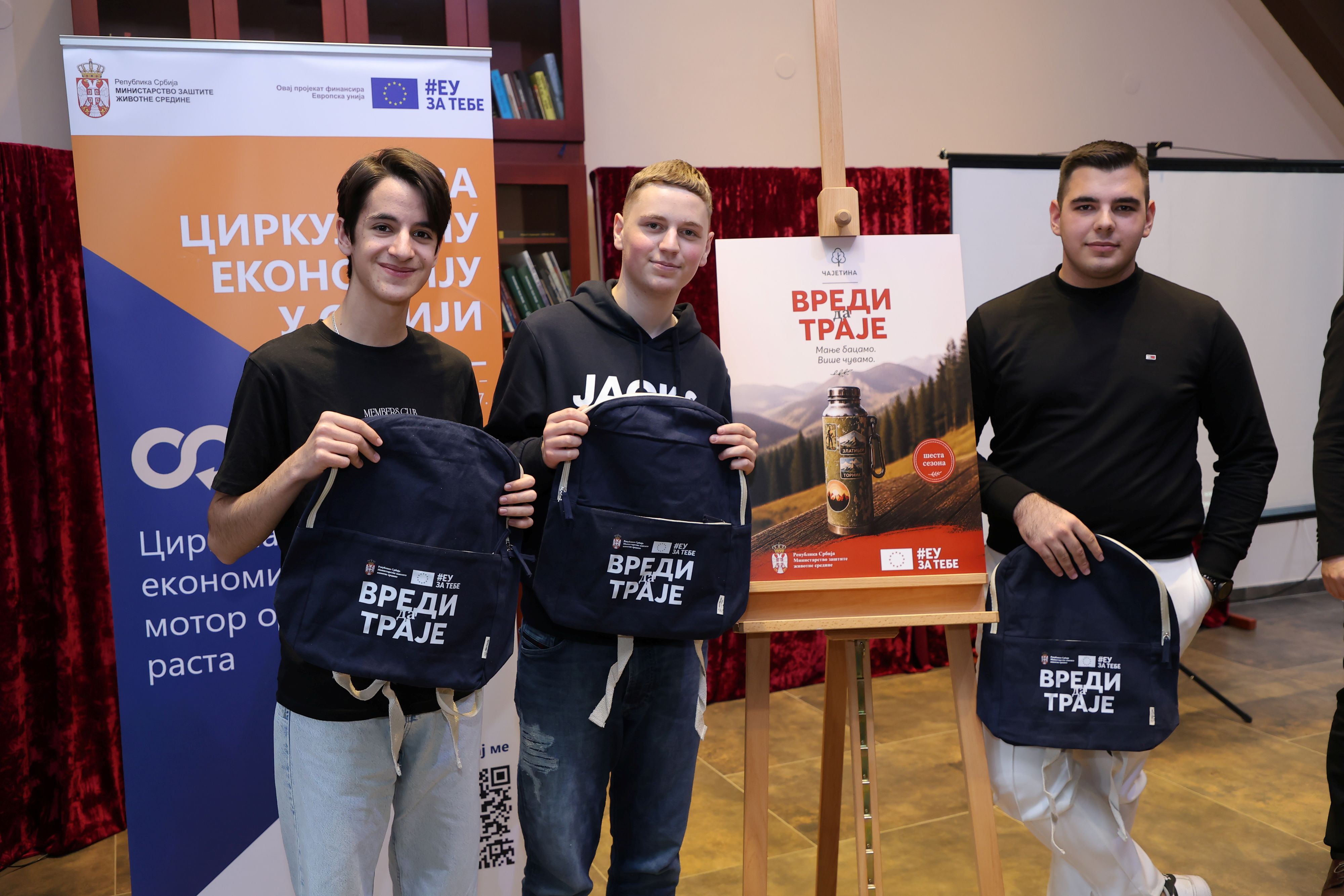
At the Library in Čajetina, five student teams presented their sustainable tourism projects to the jury and the audience. Their task was to come up with ideas on how tourism could generate less waste, preserve natural resources and benefit the local community. All teams received participation awards, while the three best projects were presented with special prizes.
“The circular economy offers practical solutions for the responsible use of resources and waste reduction, and its principles also play an important role in developing sustainable tourism and preserving natural assets. The Ministry of Environmental Protection is committed to introducing young people to circular economy principles and encouraging them to take an active role in developing and implementing sustainable solutions. We believe that education and the involvement of young people in practical activities help build the knowledge and responsible habits needed to protect the environment and create a more sustainable future,” said Aleksandra Vučinić, Head of the Circular Economy and Sustainable Development Unit at the Ministry of Environmental Protection.
At Kraljev Trg, the conversation about sustainable tourism started with what people carry in their backpacks. Residents and tourists had the opportunity to check what they pack for an outdoor trip and learn how reusable water bottles, food containers and cloth bags can replace single-use products. With the help of students from local schools, visitors also took part in a quiz with prizes and a photo booth, and received a leaflet with tips on how to enjoy nature while generating less waste.
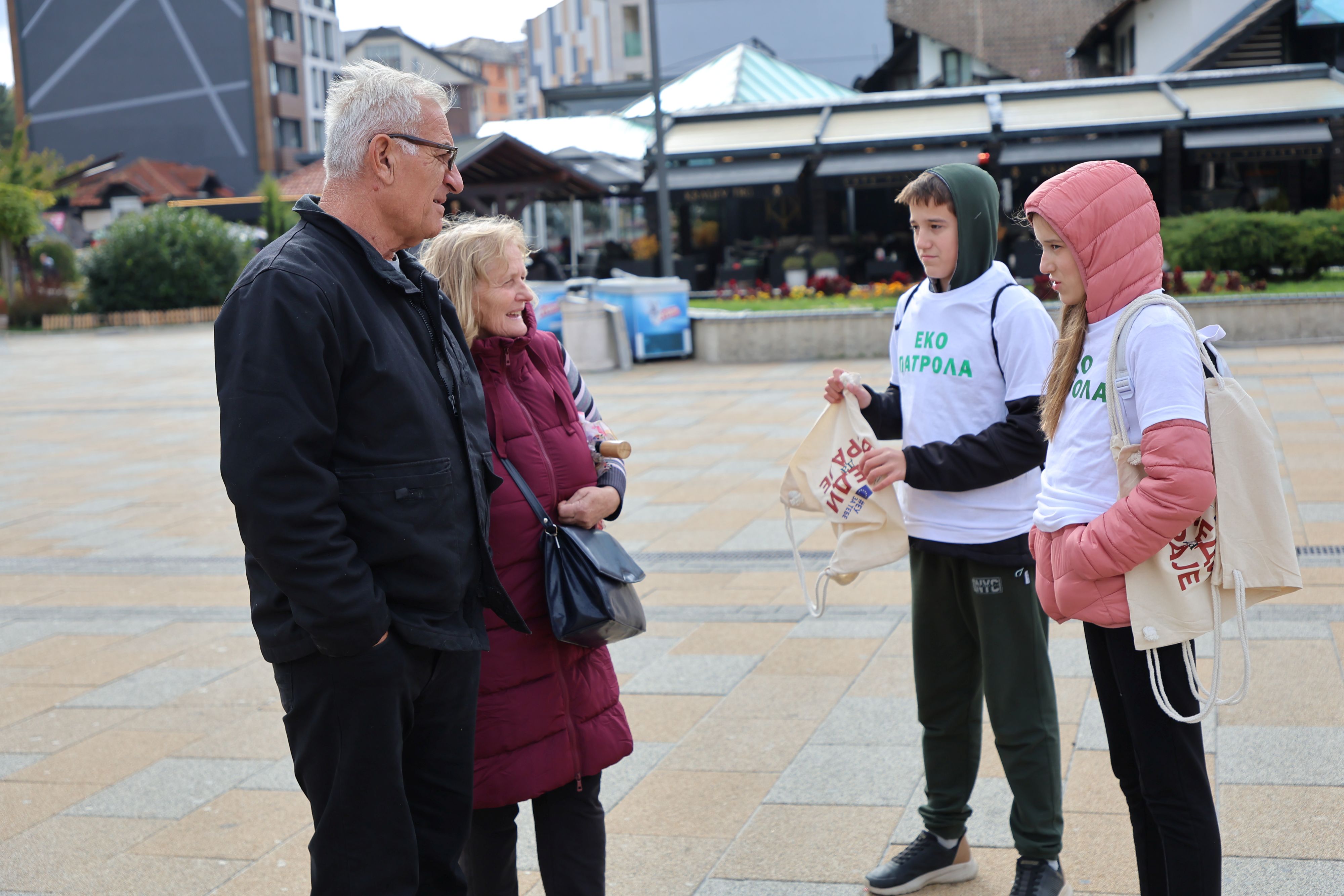
“Sustainable tourism begins with respect — for nature, for local communities, and for future generations of travellers. It means preserving landscapes, protecting wildlife, and ensuring that the beauty of places like Zlatibor remains unspoilt for all who come after us. Simple choices, such as refusing single-use items and taking our waste with us, may seem small, but together they have the power to make a lasting difference. By acting responsibly today, we help safeguard the pristine natural treasures that make our tourist destinations so special,” said Mauro Di Veroli, Head of Cooperation of the Delegation of the European Union to Serbia.
The event's message, “Enjoy Today. Preserve for Tomorrow.”, served as a reminder that nature, local food and hospitality are among the reasons people visit Zlatibor – and values we should take care of every time we stay.
The EU for Circular Economy in Serbia project is implemented by the Ministry of Environmental Protection with the aim of supporting Serbia's transition towards a circular economy through practical solutions that encourage more responsible resource use, waste reduction and the development of sustainable local communities. The project is funded by the European Union.
Photos: D. Karadarević/EU for Circular Economy in Serbia